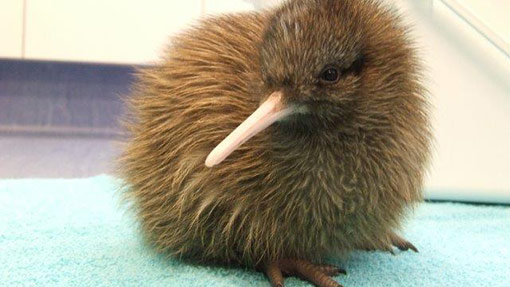
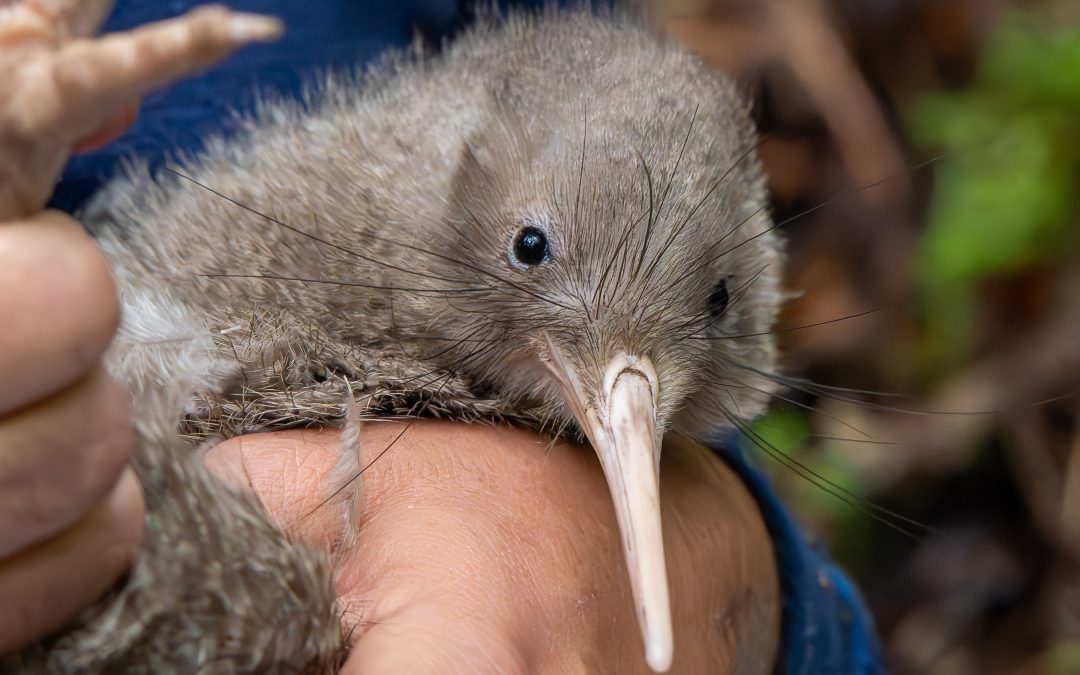
Kiwi pukupuku thriving in Brook Waimārama Sanctuary
Last week, Tamsin Ward-Smith led the removal of transmitters that were fitted on ten of the 41 kiwi pukupuku that were translocated to Brook Waimārama Sanctuary in May 2025. The kiwi were all healthy with some even gaining weight, despite it getting towards the end of the breeding season when kiwi have usually lost weight.
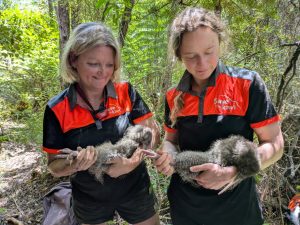
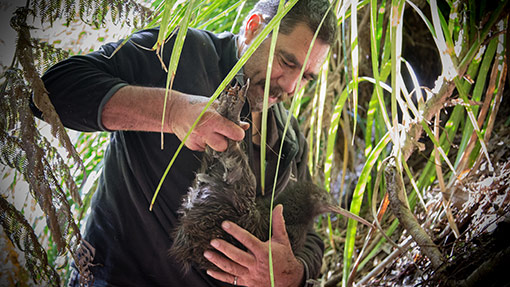
Tamsin and Nadine Maue visited the sanctuary to remove the transmitters and conduct final health checks.
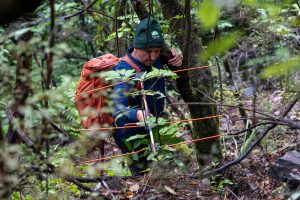
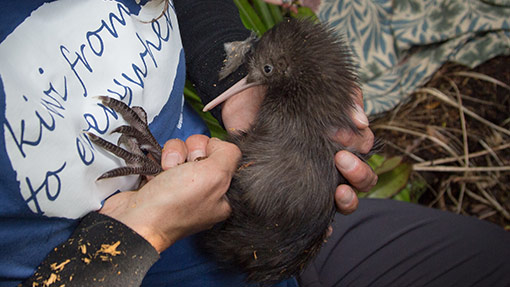
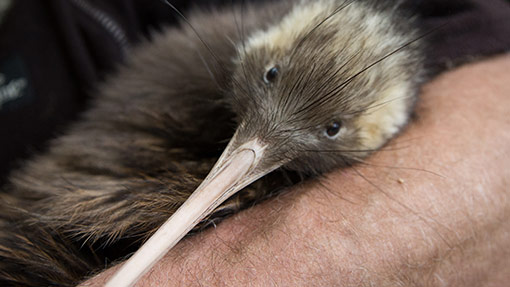
Each kiwi is fitted with a radio transmitter which helps us to monitor them (photo credit: Sean McGrath)
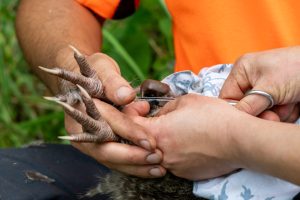
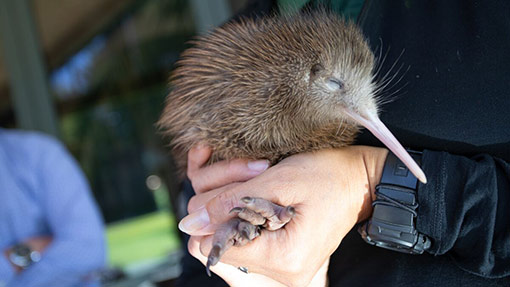
Kiwi have gnarly claws and it helps to hold onto their legs when handling them (photo credit: Sean McGrath)
During the health checks, the team found five chicks in the burrows (with two chicks cozied up in one burrow), which means that there could be up to 10-15 chicks roaming the sanctuary. This is an excellent sign that the kiwi are adjusting well in their new habitat.
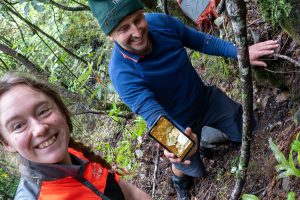
Big smiles all around after finding kiwi pukupuku chicks in a burrow (photo credit: Sean McGrath)
This visit was also an opportunity to work closely with the sanctuary team and train two of their staff as kiwi handlers. Save the Kiwi has focused on training kiwi handlers since launching the strategy which has helped support the growing need to catch and handle kiwi as part of the program. Many of these trained handlers now support kiwi conservation around the country.
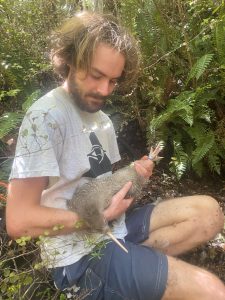
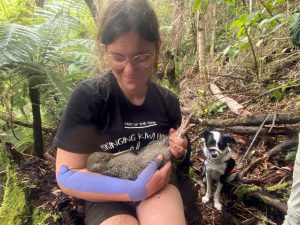
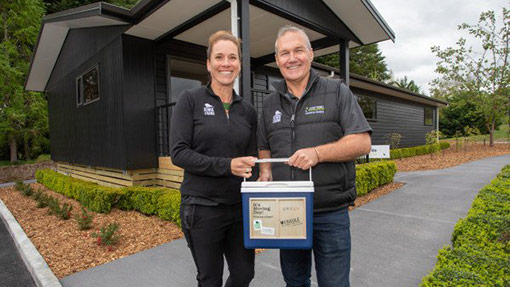
(left) is a kiwi handler in-training and Chelsea Haley a trained kiwi handler (right) with Spur the kiwi detection dog
Continued monitoring
Transmitters were attached to the adult kiwi to monitor their health and breeding success post-translocation. Now that the kiwi are doing well, they will no longer be monitored as closely.
Now that the transmitters are removed, the kiwi will roam freely in the sanctuary with no more handling necessary. The Brook Waimārama Sanctuary staff and volunteers will continue to track the growing population using kiwi call counts or acoustic recorders.
Smallest kiwi making a comeback
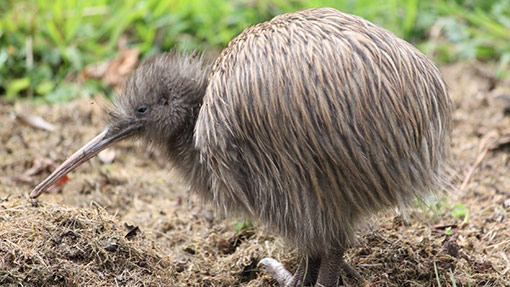
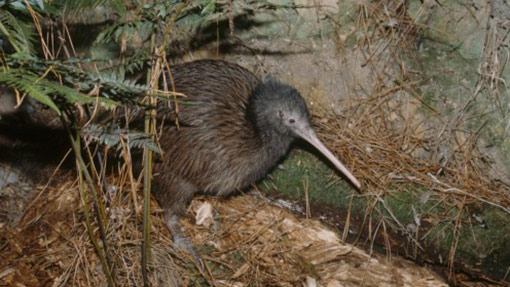
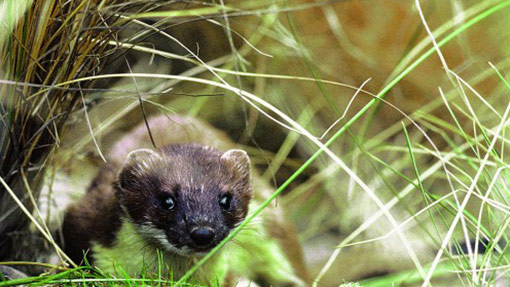
Kiwi pukupuku are the smallest of the kiwi species. In 1912, five birds were translocated from Jackson Bay on the West Coast to Kāpiti island in an attempt to save the species. By 1980, kiwi pukupuku were thought to be extinct from the South Island due to predation by stoats, cats and larger predators. They had not been reported on the mainland of the South Island for over 50 years until the recent re-discovery of a population on the West Coast last year and this new population now establishing at the Brook Waimārama Sanctuary.
The Brook Waimārama Sanctuary holds night tours for guests. You can support the growing kiwi population by joining one of their night tours. Who knows, you might get the chance to hear (or even see) kiwi pukupuku.
Feature photo credit: Sean McGrath. He is a volunteer at the Brook Waimārama Sanctuary who wrote about his experience during the transmitter removal. You can read about his experience here.