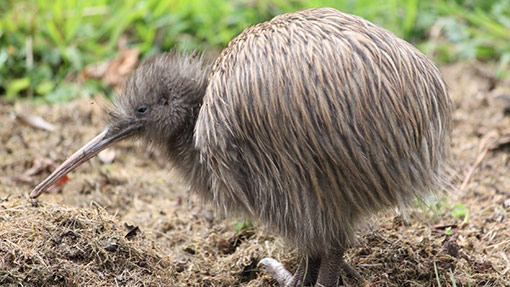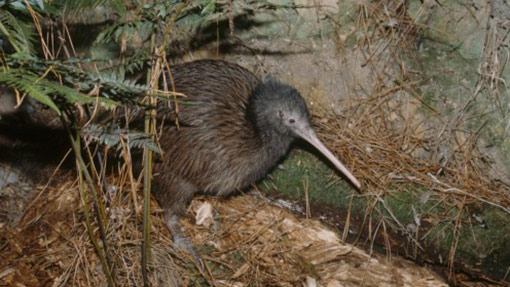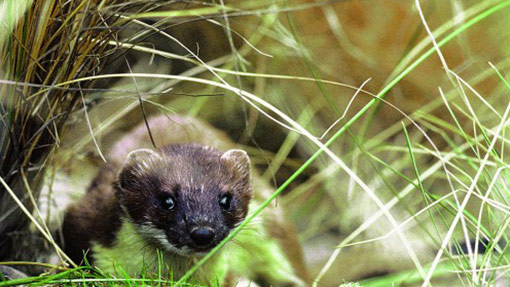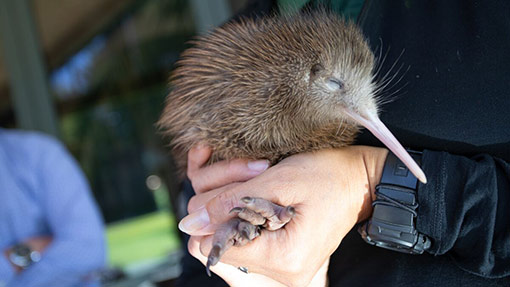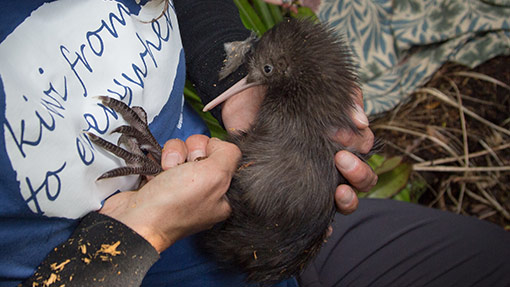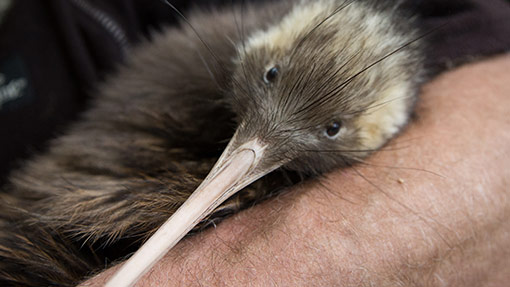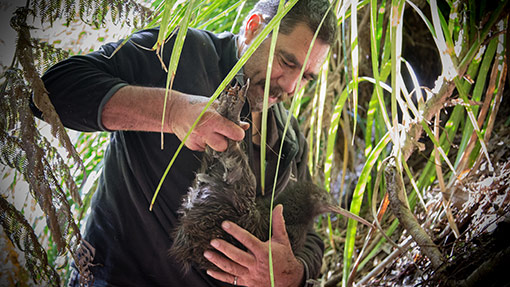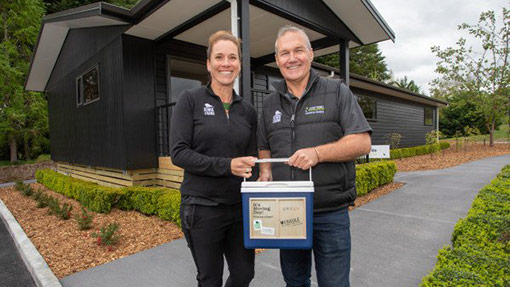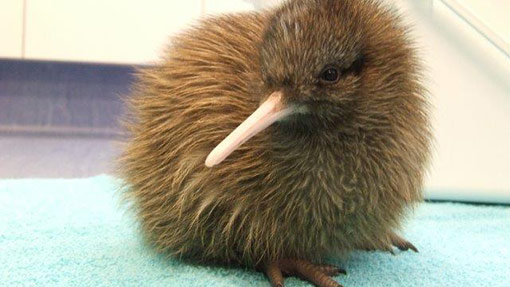
The Napier Kiwi Crèche was opened in 2020 to rear chicks hatched at the Gallagher Kiwi Burrow in Taupo and The National Kiwi Hatchery in Rotorua. The chicks are brought to the crèche where they can grow safely until they are large enough to cope better with introduced predators, such as stoats.
Inside the Napier Kiwi Crèche
The team at the crèche ensure that each young bird is growing strong and fit for release. The young birds are fed an artificial diet designed by Massey University that mimics their wild diet. The birds will also feed on insects that naturally occur in their runs or in old logs provided by the team for their enrichment.
After about 3-4 months the birds are released back where their eggs were lifted from.
Supporting the recovery of Eastern brown kiwi
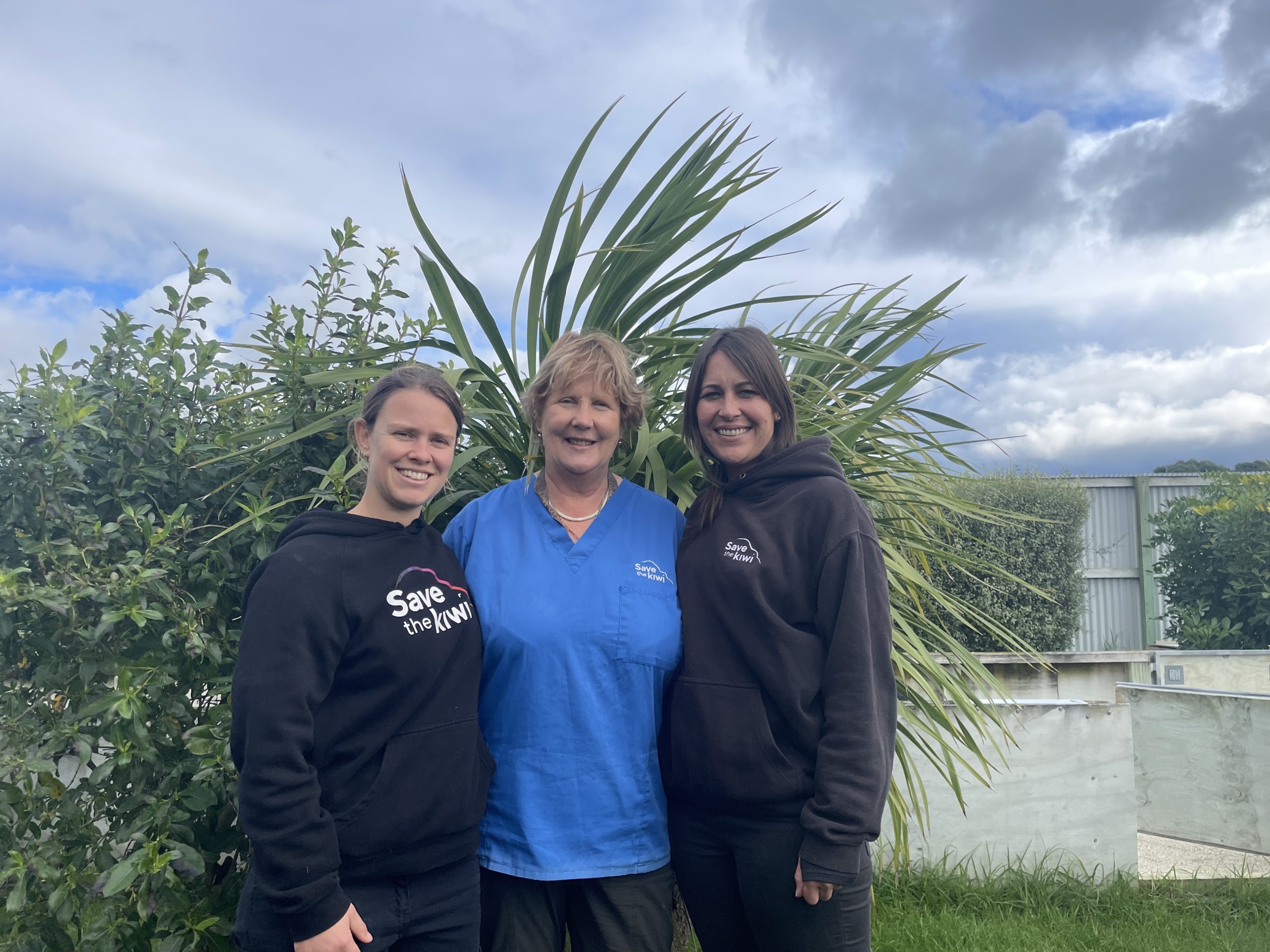
The crèche has raised more than 290 birds, supporting the recovery of the Eastern brown kiwi. The team works closely with the kiwi recovery happening on Maungataniwha with the Forest Lifeforce Restoration Trust and the Kaweka Forest with the Environment Conservation Outdoor Education Trust and Cape Sanctuary.
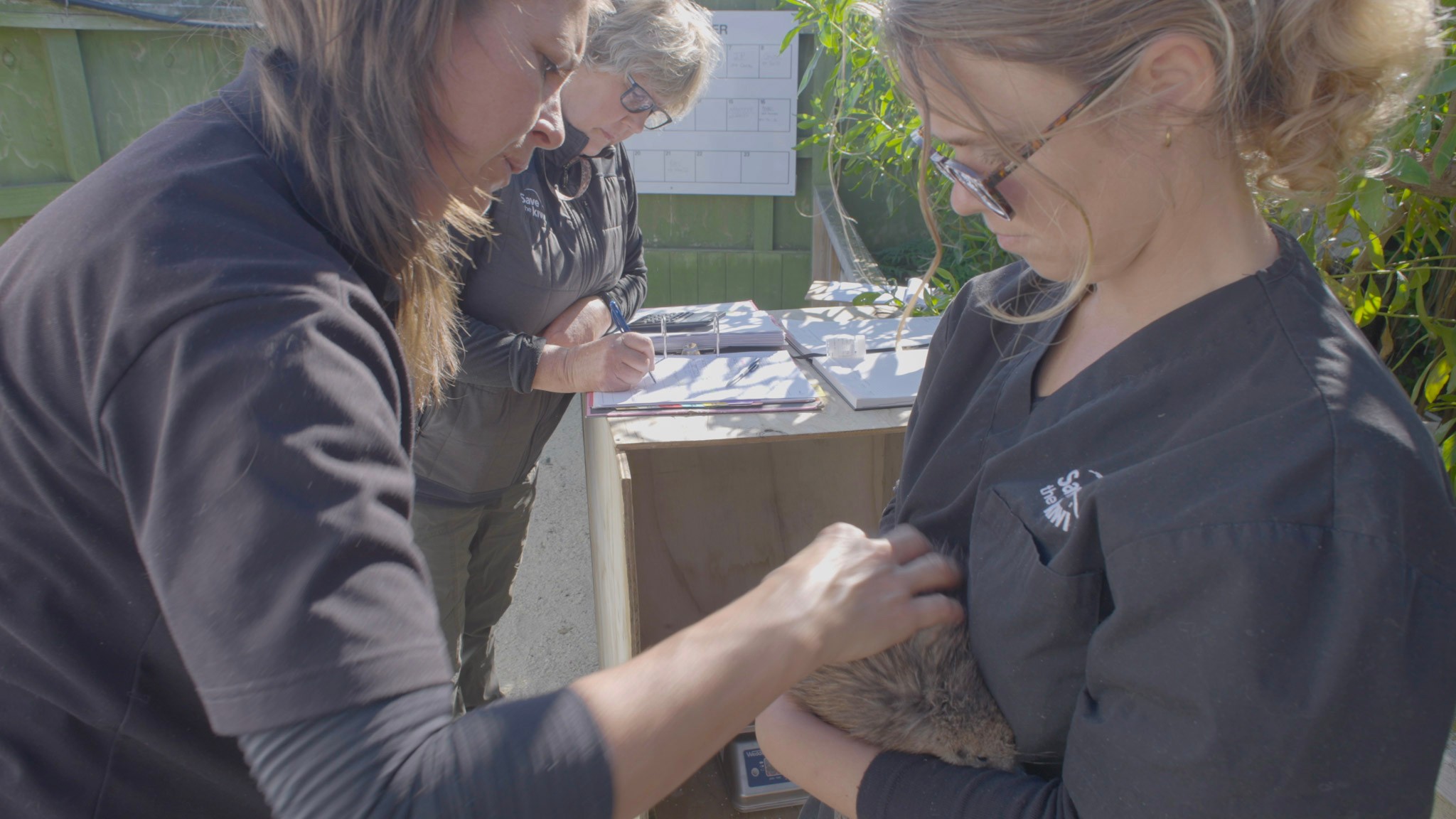
With wild kiwi becoming more common around the Hawke’s Bay Region, the team also trains local nurses on best practice kiwi handling should there be any injured birds.
Proudly supported by Millenium Hotels and Resorts
The Millennium Hotels and Resorts proudly supports the team at the crèche. Millennium have developed the Manaaki programme where guests can opt out of room service to support the care of a chick.

The latest news from the Napier Kiwi Crèche

2025 Year End Highlights
It’s been a pretty busy 2025 for us at Save the Kiwi. Let’s look back at some highlights from this year. The Gallagher Kiwi Burrow hatched its 400th chick in January. The chick was named Wai after the Wairakei Golf + Sanctuary where the Burrow is located. Wai before...

Completing the Kiwi Circle
Miriam Strachan, Kiwi Keeper at the Napier Kiwi Crèche had a fantastic opportunity to help with the recent massive egg lift with Forest Lifeforce Restoration Trust. Read about her experience below. On the 15th of September, I had the amazing opportunity to join the...

Everyday Kiwis saving the kiwi: Helping to save the Eastern brown kiwi, one little chick at a time
Photo: Bev Wilkinson (L) and Miriam Strachan (R) conduct a health check on a kiwi at the Napier kiwi creche. Bev Wilkinson knows a thing or two about kiwi. And she should, after working with this taonga species for almost 20 years. “My kiwi conservation career started...
Advocacy
We’re all in this together. Save the Kiwi works to raise awareness about the plight of the kiwi and what is being done to help via social media, regular newsletters, and media publicity. (Photo credit: Josh Forrest)
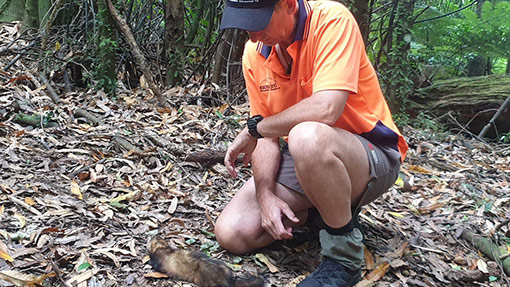
Predator control
Stoats, ferrets, rats, dogs, and other predators are the greatest risk to the kiwi population. Find out more about predators, the harm they cause to our native taonga, and what we can do to help.
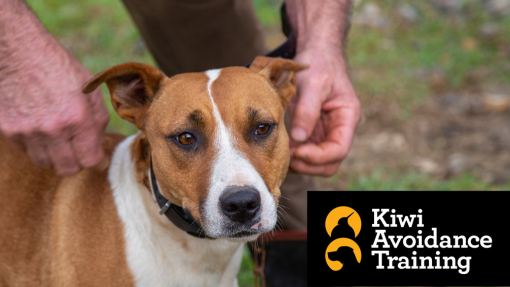
Kiwi Avoidance Training
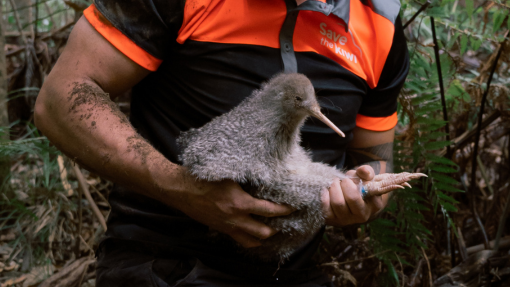
Dogs are the biggest threat to adult kiwi. Learn about a method that can successfully teach dogs how to avoid kiwi when they come across them in the wild. (Photo credit: Jenny Feaver)
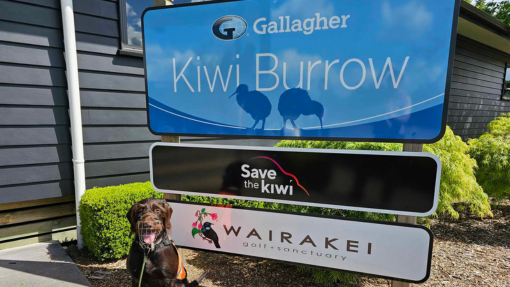
Gallagher Kiwi Burrow
The Gallagher Kiwi Burrow (formerly known as the Crombie Lockwood Kiwi Burrow) is Save the Kiwi’s kiwi incubation, hatching, and brooding facility. Learn about the facility and the chicks that temporarily call this facility home.
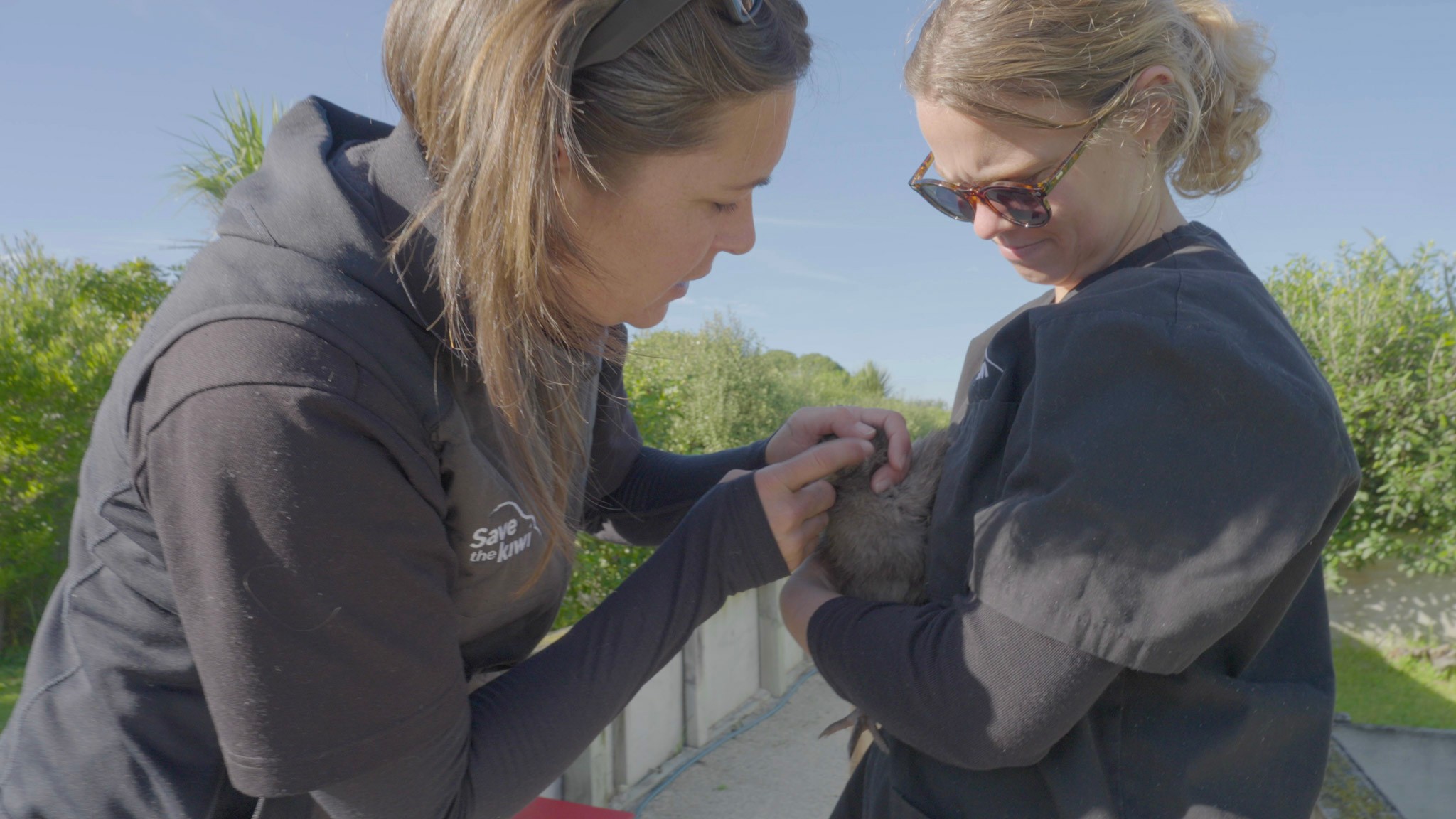
Napier Kiwi Crèche
The Napier Kiwi Crèche is where young kiwi can grow safely until they are large enough to cope better with introduced predators before being released into the wild. Learn how we prepare kiwi chicks to live out in the wild.
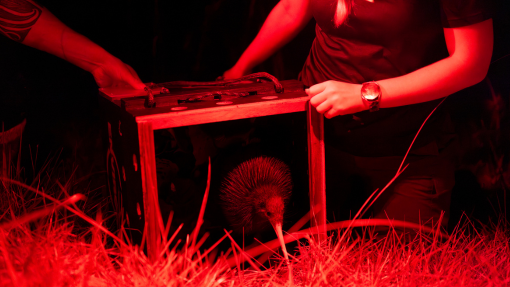
Kōhanga Kiwi
Kōhanga Kiwi is a ground-breaking strategy that both preserves current numbers of kiwi and increases them. Learn about this world-leading conservation initiative. (Photo credit: Alex McVinnie)
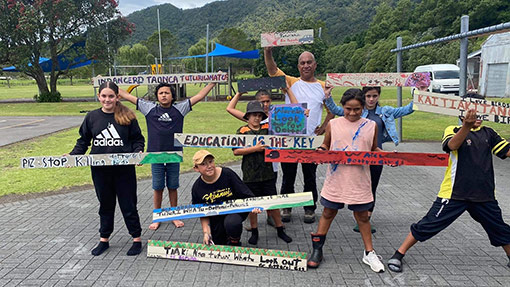
Whānau, hapū, iwi & kiwi
Kaitiakitanga is integral to the spiritual, cultural, and social life of tangata whenua. Find out how Save the Kiwi is committed to supporting Māori leadership in kiwi and wider efforts to restore the health of the whenua.
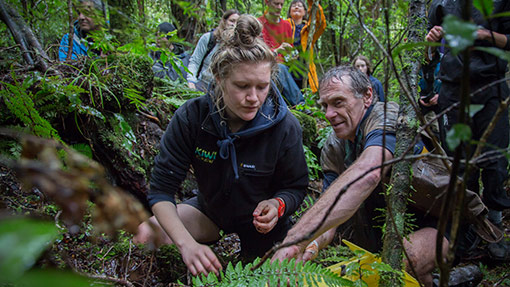
Funding
Since 2002, Save the Kiwi has allocated millions of dollars in conservation funding. If your community group works to save the kiwi, you could be eligible for kiwi conservation funding. (Photo credit: Jenny Feaver)
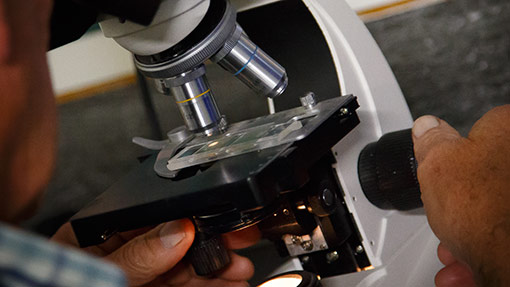
Research
An enormous amount of research about the kiwi population has been undertaken over the years. Learn about the research behind Save the Kiwi’s vision.